
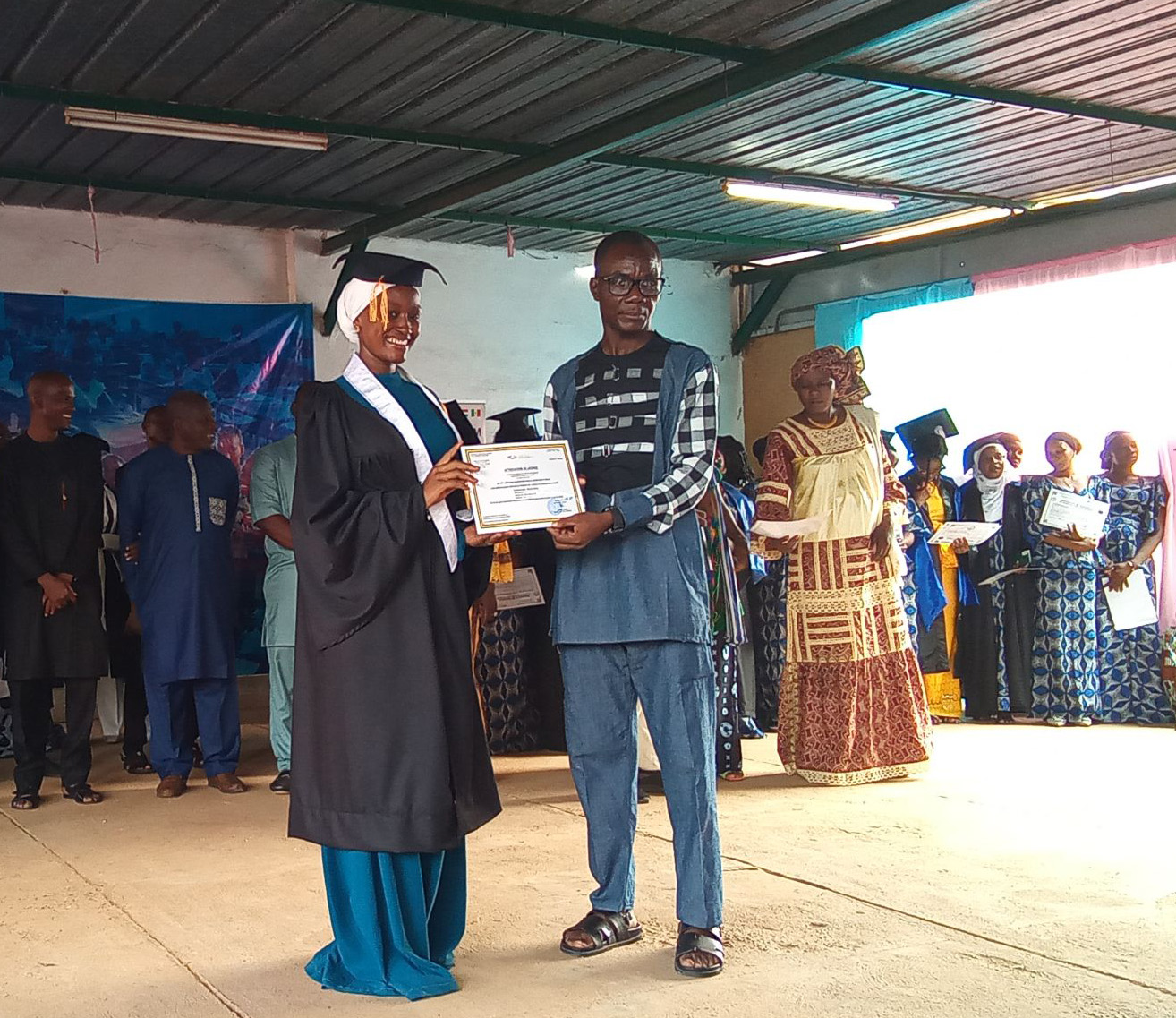
In Koutiala, Mali, the Espoir de Koutiala School of Health (ESK) recently marked a major milestone with the graduation of its 19th class. But the event was more than just a diploma ceremony — it was a powerful testament to the success of a bold initiative led by IntraHealth International, a Global Communities Partner, through the Classroom to Care (C2C) project. C2C actively strengthens health professional training in the region by focusing on sustainability and impact. Takeda Pharmaceutical Company funds the project, which launched in 2022.
Today, ESK boasts an enrollment of 532 students, the majority of whom are women. The latest graduating class of 119 new professionals achieved remarkable results:
- 83.33% passed the health technician exams
- 94.54% earned their bachelor’s degrees
This success is the result of a close collaboration between ESK and IntraHealth. By using a competency-based approach and offering a modern, inclusive learning environment, C2C helps to strengthen the skills of nurses, midwives, and health technicians.
INNOVATIVE FACILITIES SUPPORTING FEMALE STUDENTS
According to Dr. Siriman Sissoko, director of ESK, the partnership with IntraHealth has brought fundamental improvements to the school. Among the most impactful is the enhanced mother-and-baby room.
“This initiative allowed many young mothers to complete their studies,” he says.
Indeed, having a dedicated space tailored to the needs of pregnant and breastfeeding students has significantly improved female retention in academic programs. Student testimonies confirm this.
Bertin Baya, a graduating health technician, explains: “The baby room had a huge impact and positively influenced the learning experience for many women.”
ADVANCED EQUIPMENT FOR PRACTICAL, HANDS-ON LEARNING
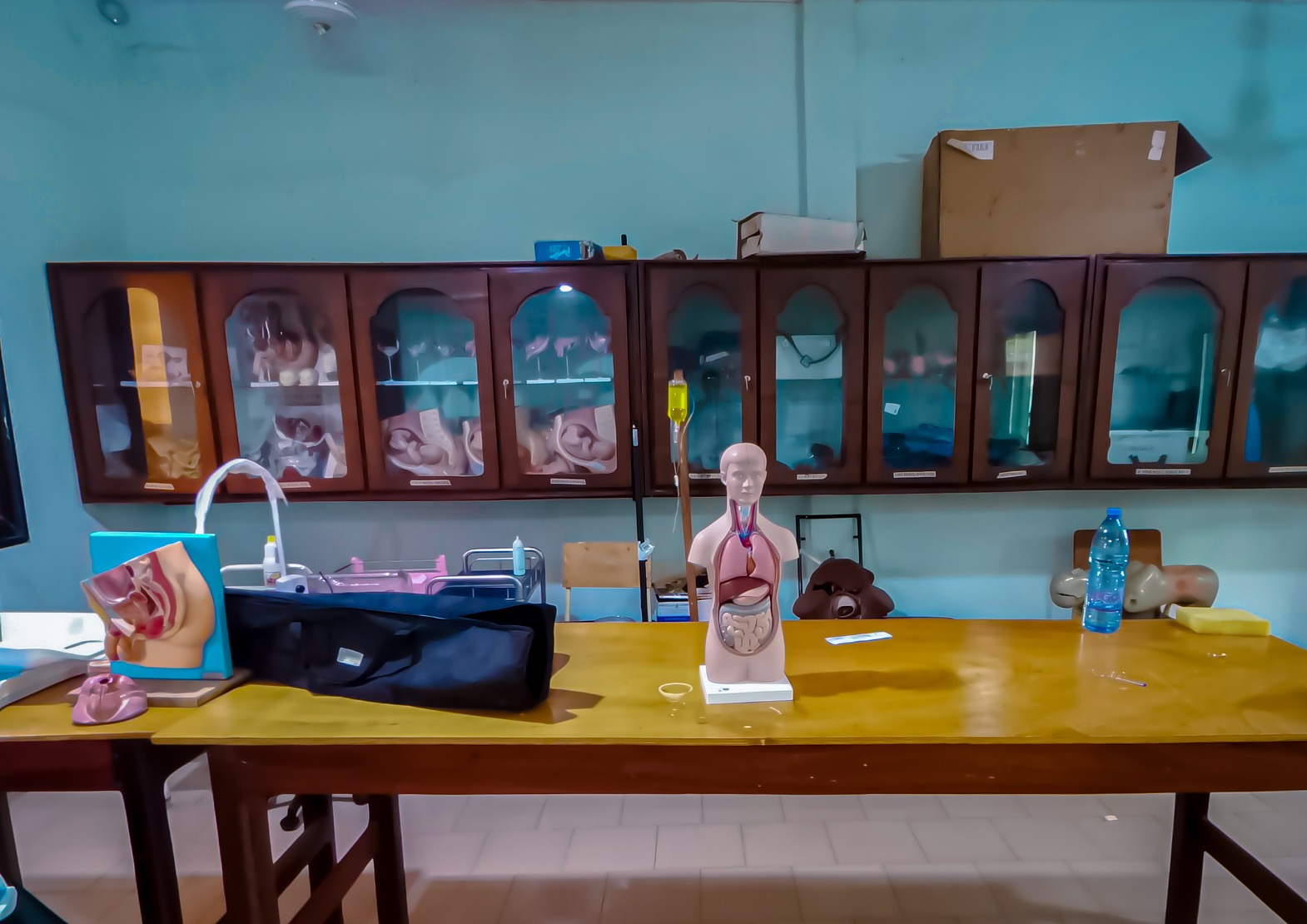
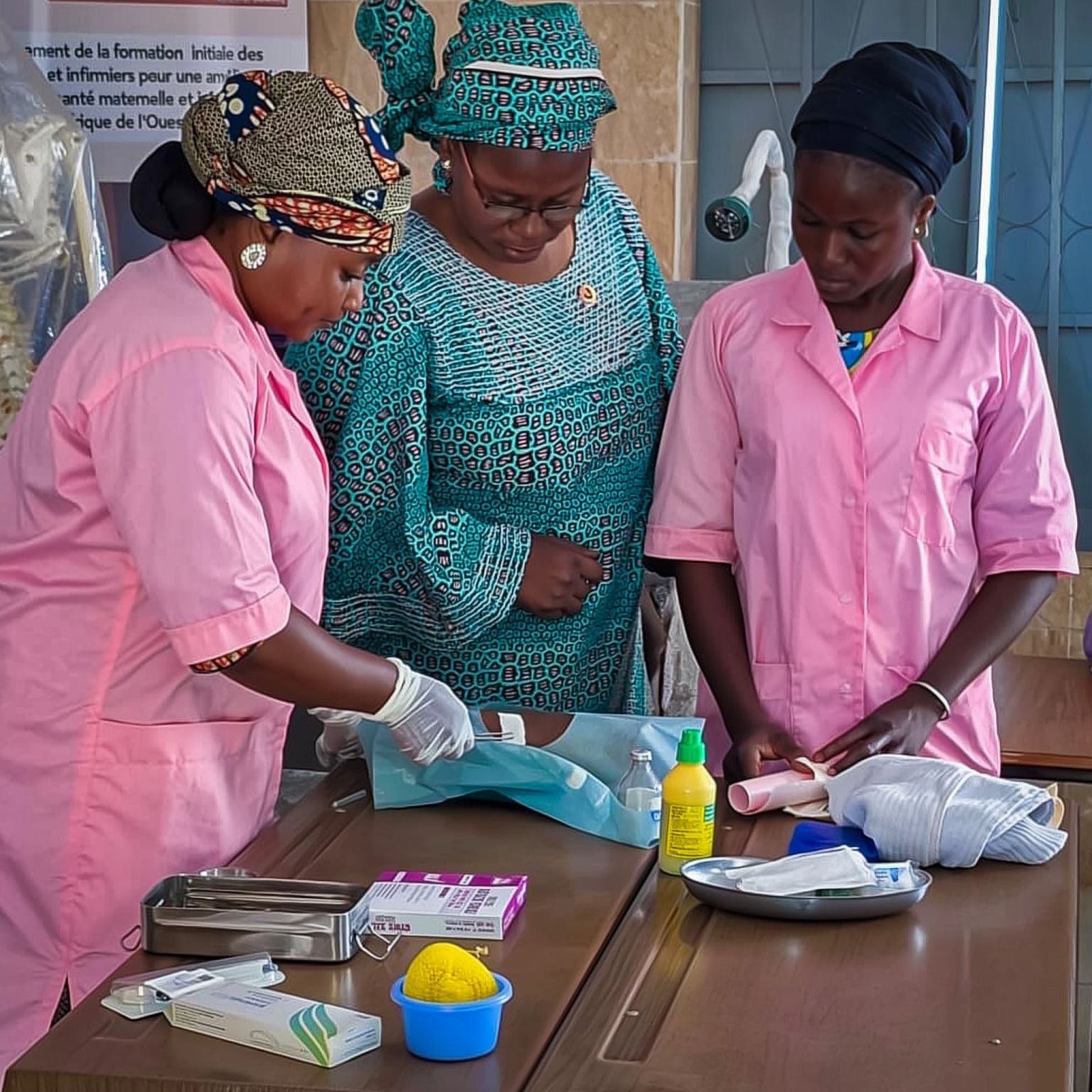
One of the key strengths of C2C is its investment in equipping skills labs with advanced simulation tools. These allow students to gain hands-on experience in a safe and controlled environment.
Adiaratou Dembélé, a graduating student, praised the quality of the modern tools made available: “Even before going into the field, we practiced deliveries, injections, and other procedures on highly realistic mannequins provided by the project.”
Kadiatou Ouattara, another graduate, added: “I learned essential new skills like IV insertion and blood draws.”
In Ségou, on May 24, 2025, the Vicenta Maria Center — another C2C project partner — celebrated the graduation of its 6th and 7th Bachelor of Health Sciences classes and its 25th class of Health Technicians. This was the first graduation since the beginning of Vicenta Maria’s collaboration with IntraHealth under C2C.
Success rates ranged from 88% to 100%, depending on the program.
Aïssata Déborah Kassogué, 22, a student in Ségou originally from Koutiala, shared: “The skills lab helped us understand how to use the equipment. Thanks to it, we know how to find veins and assist in childbirth. The mother-and-baby room lets students stay close to their children, knowing they’re safe. C2C gave me more confidence — I know now I’m ready to care for patients.”
Augustin Yamkoudougou, a full-time instructor and head of the internal quality assurance unit, explained:
“Before C2C, we relied on traditional lectures that didn’t support practical learning. Now, with the competency-based approach, students are at the center. Thanks to the simulation labs and the OOAS harmonized curriculum, we’ve seen major improvements in teaching and learning. The quality assurance cell supported by the project has also strengthened our governance structures.”
COMPETENCY-BASED EDUCATION IN ACTION
The quality of teaching at ESK has significantly improved thanks to the competency-based approach promoted by C2C. One faculty member explained how her teaching methods have evolved: “Before, we mostly gave theoretical lectures. Now we use demonstrations, case studies, and simulations — and it makes learning much easier.”
She continued: “When we evaluate students now, we’re truly satisfied with the results compared to before.”
QUALITY INSTRUCTION FOR ALL
C2C’s inclusive approach has also allowed partner schools like ESK to embed principles of fairness, accessibility, and respect into their daily operations. The project conducted in-depth assessments of institutional needs related to creating welcome and supporting environments and organized workshops to share findings and create action plans. This strategy not only ensures access to quality education for all but also fosters a respectful and safe learning environment.
A MODERN LAB OPEN TO THE COMMUNITY
During the graduation ceremony, an ESK representative highlighted the importance of continued support from technical and financial partners. Their contributions have enabled the establishment of a modern lab now accessible to students, researchers, and even nearby health centers — bridging the gap between education and clinical realities.
A MODEL FOR HEALTH TRAINING IN THE REGION
Ultimately, the recent graduation ceremonies in Koutiala and Ségou were more than celebrations of individual achievements. They reflected a deep commitment to training highly qualified health professionals, ready to address local and regional health challenges.
Thanks to C2C, both ESK in Koutiala and Vicenta Maria in Ségou have become benchmarks for health education in Mali. The outstanding results of these graduating classes are clear indicators of the success of this innovative initiative — one that paves the way for a better future not only for health professionals, but also for the communities they serve.