
West Bank and Gaza
Global Communities has worked in the West Bank and Gaza since 1994, partnering with local communities, government institutions, and the private sector to meet urgent needs and build long-term resilience. From rebuilding infrastructure and supporting good governance to economic development and access to credit, Global Communities’ commitment to the Palestinian people is deep and varied.
Palestine is home to more than 5.4 million people living under conditions of political instability, economic uncertainty, and recurrent humanitarian crises. Nearly 85% of Gazans remain displaced after the 2023 war, while unemployment rates are among the highest in the world — disproportionately impacting youth. Limited access to clean water, reliable electricity, and health services compounds daily struggles for families, particularly women and children.
Over the years, we have supported families in times of crisis with food assistance, cash support, and humanitarian aid, while also investing in long-term development — from strengthening local governance and building essential infrastructure to promoting financial inclusion, homeownership, and entrepreneurship.
This work builds on more than two decades of presence in Palestine, where Global Communities has cultivated partnerships with ministries, local governments, the private sector, civil society organizations, and community leaders. These relationships are the foundation of our commitment to improving quality of life and expanding economic opportunities for Palestinians.
Today, we are providing urgent, on-the-ground support amid the ongoing crisis while continuing to expand the foundations we have built over decades. In Gaza, we are working with local partners to deliver food assistance, emergency cash, and clean water to families displaced by conflict.
At the same time, through Vitas Palestine, we are strengthening economic resilience by helping entrepreneurs and small businesses recover and grow. By combining lifesaving humanitarian response with long-term investments in livelihoods, governance, and youth, Global Communities is committed to helping Palestinians withstand today’s challenges while laying the groundwork for a more stable and prosperous future.
Current Programs
Mobilizing a Collaborative Emergency Response Alongside Partners
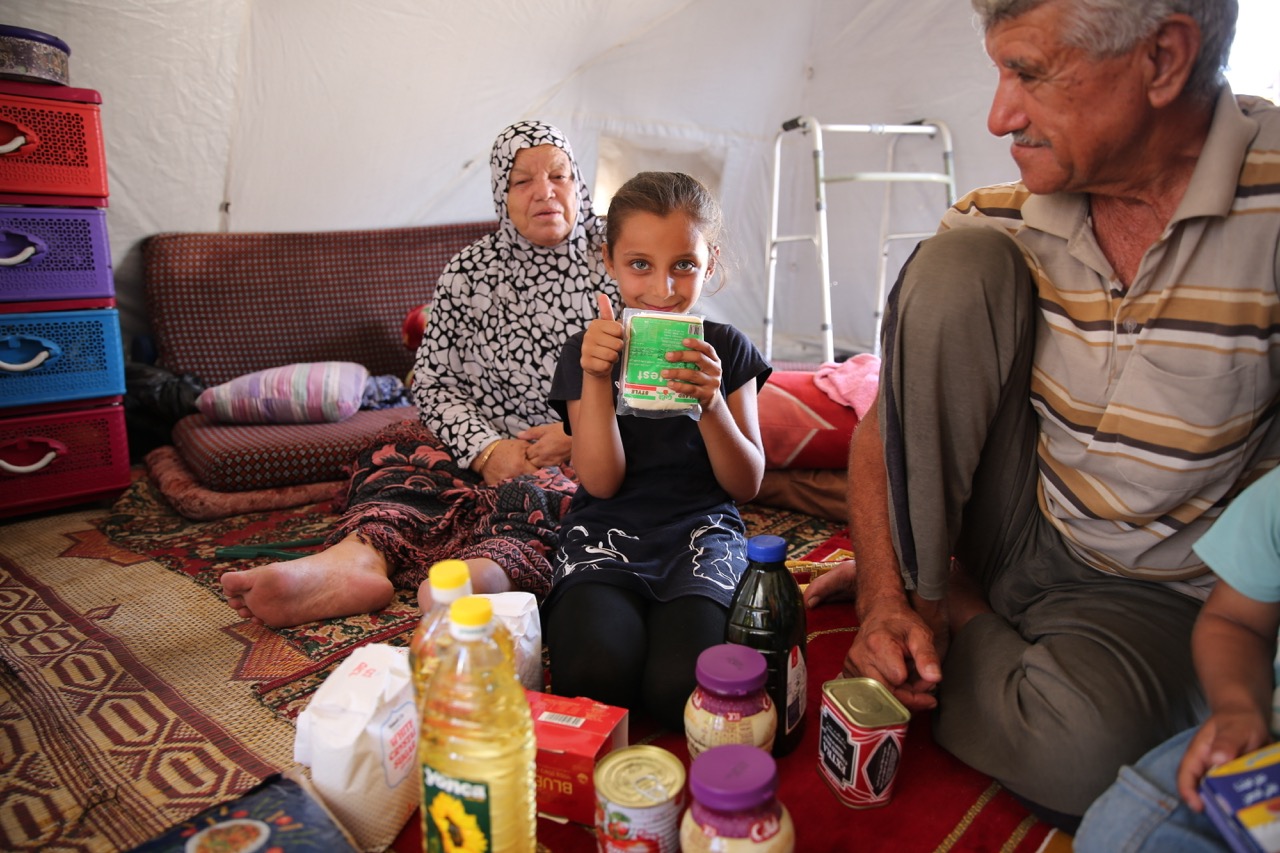
In the wake of ongoing escalations in Gaza, Global Communities has drawn on its extensive network and long-standing partnerships to deliver life-saving humanitarian assistance to families facing unprecedented hardship.
Working hand in hand with partners such as the World Food Programme (WFP), the Bank of Palestine, and local civil society organizations, we are addressing urgent needs while laying the groundwork for recovery and resilience.
Central to our response has been the rapid distribution of essential relief supplies tailored to the evolving realities of displaced populations. At the onset of the crisis, we provided food vouchers to enable households to purchase urgently needed items. As access and market conditions shifted, our focus moved to in-kind food distributions — including hot meals, fresh produce, and food parcels designed to sustain a family of five for two weeks.
These efforts have prioritized families living outside United Nations Relief and Works Agency (UNRWA) centers, where Global Communities is WFP’s primary implementing partner for in-kind food assistance in Central and Southern Gaza.
Beyond food, Global Communities has delivered vital winterization support such as shelter materials, blankets, and vouchers to help families weather the colder months. Recognizing the multifaceted nature of humanitarian need, we also distribute non-food items, including water, hygiene supplies, and other basic necessities, alongside our food aid to maximize impact.
At the same time, we are committed to helping families and communities rebuild their livelihoods. Through the Gaza Grant Facility, implemented in partnership with the Swedish Government and Palestine Investment Fund, Global Communities is enabling micro and small enterprises to recover, adapt, and sustain operations despite the challenges of conflict and market disruption. This support is vital for preserving jobs, stimulating local production, and strengthening household resilience in the face of prolonged crisis.
Our role extends beyond direct distribution. Global Communities coordinates closely with other actors across Gaza, the West Bank, and Egypt, ensuring a cohesive, efficient, and complementary response. Leveraging our established presence and infrastructure, we have supported partner organizations in scaling up their delivery efforts, helping to ensure that assistance reaches as many families as possible during this time of crisis.
Expanding Access to Credit Through Vitas
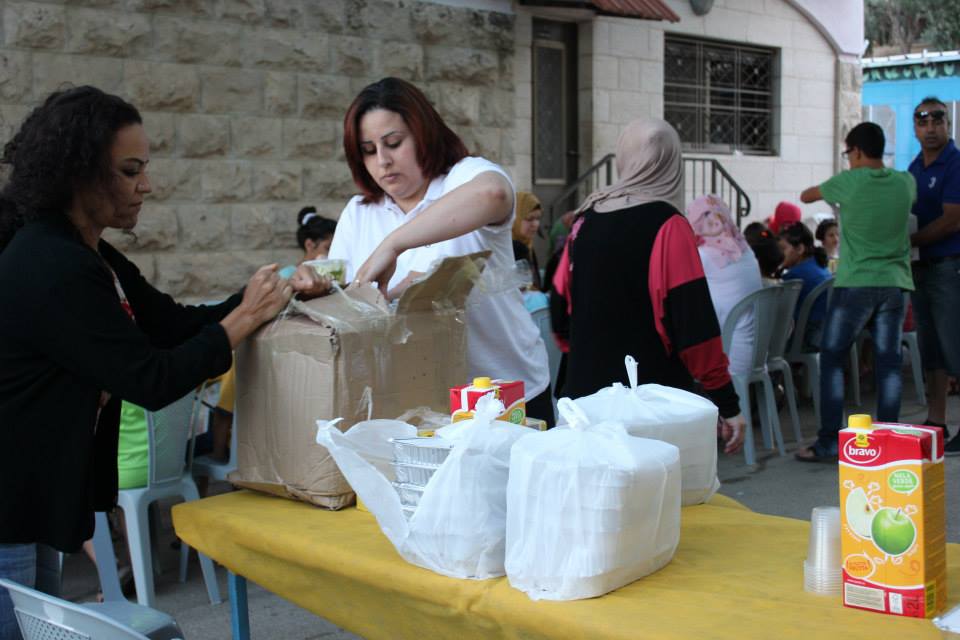
Through Vitas Palestine, Global Communities has been providing loans to Palestinians excluded from the formal financial sector since 1994. As one of the first credit programs in the Palestinian territories, Vitas Palestine, formerly Ryada, initially offered home improvement loans to families in Gaza. Building on its early success and the positive impact on clients’ lives, the program expanded to the West Bank in 2001, where it now operates eleven branches as Vitas Palestine.
Today, Vitas Palestine offers micro and small business loans, small enterprise loans, home improvement loans, and personal loans. These services enable Palestinians to invest in their futures, strengthen their livelihoods, and participate more fully in the social and economic life of their communities. Vitas Palestine currently serves over 18,000 active clients, with a total loan portfolio of $57 million.
Strengthening MSMEs for Inclusive and Sustainable Economic Growth in Palestine
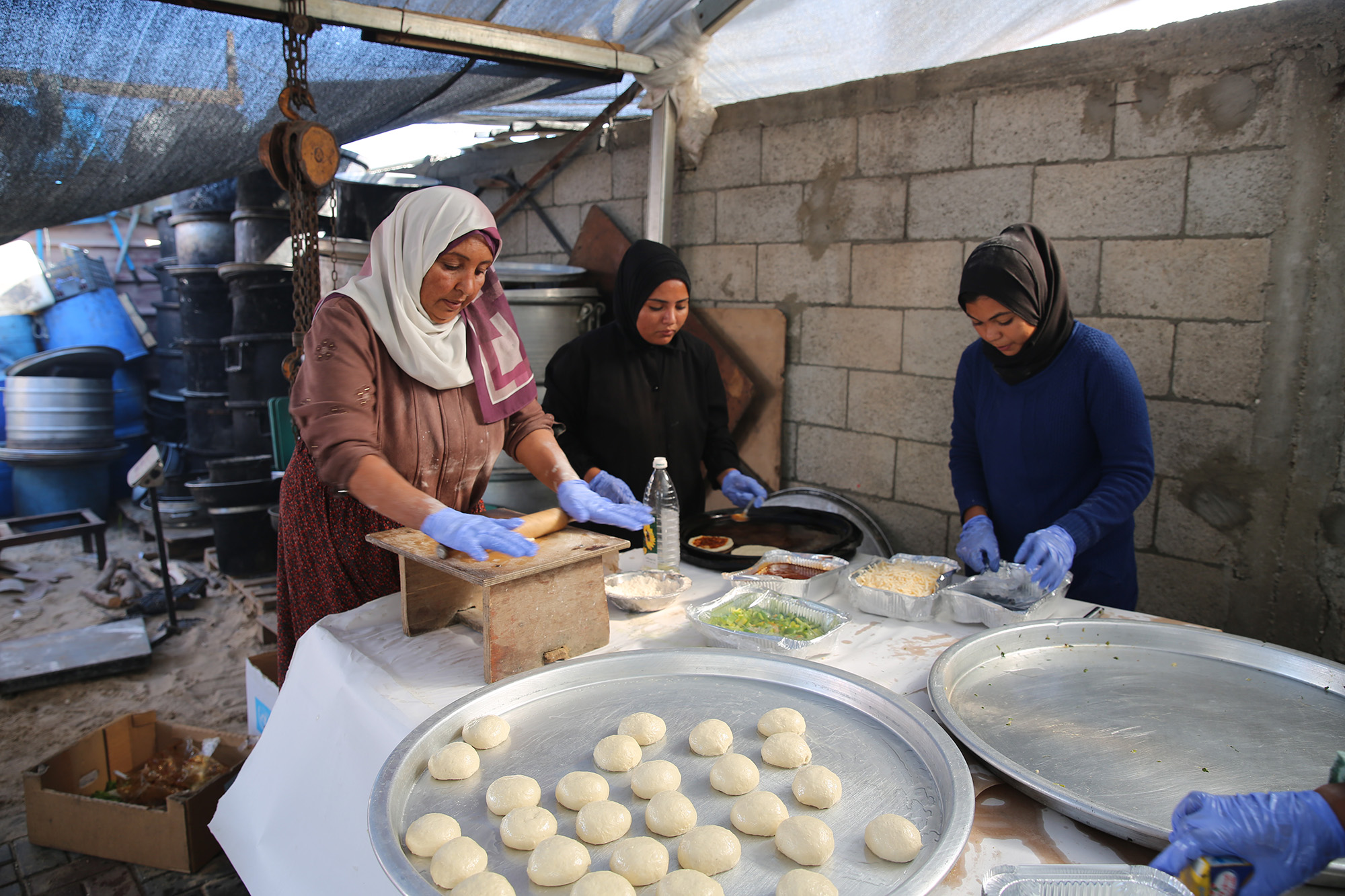
The Supporting MSMEs Competitiveness and Growth in Palestine Programme (SMCGP), funded by the Swedish International Development Cooperation Agency (Sida) through 2026, seeks to create the conditions necessary to enhance the competitiveness and growth of micro, small and medium enterprises (MSMEs). Its goal is to contribute to sustainable economic development by fostering better incomes, productive employment with decent working conditions for women and youth, and inclusive growth.
Guided by market systems development (MSD) principles, human-centered design, and the integration of gender, social inclusion, and positive youth development, the program applies a highly networked and digitized approach. By engaging the private sector, government, financial institutions, donors, development programs, and other key stakeholders in Palestine, the initiative catalyzes enterprise competitiveness and unlocks income and employment opportunities with the greatest potential for women and youth. Both incremental and transformational pathways are built into the program’s impact framework to ensure lasting change.
Previous Programs
Empowering Vulnerable Families to Build a Resilient Future in Gaza
The Inclusive Livelihoods and Economic Empowerment for Development (ILEED) program provided vulnerable Gazans with pathways out of poverty by supporting households to build sustainable livelihoods and strengthen resilience at both the household and community levels. Drawing on Global Communities’ 29 years of experience in Gaza, the program emphasized a holistic and locally led approach, co-created with community-based organizations to ensure adaptability, sustainability, and meaningful impact.
ILEED combined livelihoods and stabilization support with a Rapid Response Mechanism to address urgent needs in Gaza’s volatile environment. By coordinating with local partners and related initiatives, the program amplified resources and extended its reach, enabling communities to access quality services, absorb shocks, and reduce future vulnerabilities. In doing so, ILEED laid the foundation for long-term. (Completed in 2025)
Worker Cooperatives for Youth Employment
The USAID Active Citizenry Activity (ACA) aims to increase citizens’ civic participation and support efforts to advocate for positive changes, and to improve overall living conditions for Palestinians. ACA supports citizens, the civil society sector, independent media organizations, professional organizations, unions, and other relevant stakeholders operating in the West Bank (including East Jerusalem) and Gaza to become more active in public decision making and advocacy for citizens’ rights and demands.
The main goal of ACA is to increase citizens’ participation in civic life and support their efforts to advocate for positive change. To achieve this, the program focuses on three key objectives: enhancing governance and institutional capacity of civil society organizations (CSOs); increasing participatory community development and civic engagement; and promoting transparency, accountability, and advocacy efforts. (Completed in 2025)
Empowering Women and Girls in the Gaza Strip
Funded by the Neely Foundation and in partnership with the Aisha Organization and World Food Programme (WFP), Global Communities delivered empowerment and protection support to women heading vulnerable households and serving as primary wage earners in Gaza. Using an Individual Empowerment Model (IEM), the program provided psychosocial and legal assistance through individual and group counseling sessions, family counseling, awareness-raising on gender-based violence (GBV) and prevention of sexual exploitation and abuse (PSEA), as well as home visits. (Completed in 2022)
Rehabilitating Damaged WASH Facilities in Beit-Lahia
With funding from the OPT Humanitarian Fund (OPT HF), Global Communities, in partnership with the Beit-Lahia Development Association, worked to restore access to water, sanitation and hygiene (WASH) facilities for 380 households in Northern Gaza affected by conflict-related damage. Through cash-for-repair assistance and electronic vouchers for WASH items, households were supported to repair or replace water storage tanks, toilets, hand-washing stations, water supply connections, and sewage collection points. (Completed in 2022)
Performing a Rapid Damage and Needs Assessment in Gaza
Following the May 2021 conflict, the World Bank Group, in collaboration with the European Union and United Nations, launched a Rapid Damage and Needs Assessment (RDNA) to identify priority recovery and reconstruction needs across Gaza’s most affected sectors. Building on its consultancy with the World Bank to strengthen civic engagement in the water sector, Global Communities was contracted to organize, conduct, verify, and report on consultation workshops for both the water sector and social protection/inclusion components of the RDNA. (Completed in 2021)
Relief Assistance Through Distribution of Dignity Hygiene Kits
In partnership with the Bank of Palestine and WFP, Global Communities provided critical hygiene kits to internally displaced and severely affected households in Gaza. Leveraging the Bank of Palestine’s Palestine in the Hearts donation campaign and WFP’s electronic voucher system—supported by a network of 193 shops across Gaza—the program ensured rapid, dignified assistance to the most vulnerable families, including women-headed households. (Completed in 2021)
Impact
77,249
food parcels distributed to
386,245 crisis affected individuals
in Palestine in 2023
44
grants awarded to 42 local partners
in Palestine totaling $5.7M
in value from 2022-2023
1,017
dry latrines installed benefiting
3,200 IDPs in Khan Younis and Middle Area
camps from July 2024-December 2024
Resources
News

A Message to the Community from NGOs in Gaza
In recognition of the need for NGOs to increase engagement with the community in Gaza, including increasing transparency and accountability, a coalition of Palestinian NGOs and International NGOs presents the below joint message: Firstly, we would like to convey our deep appreciation to the people of Gaza for their continued willingness to engage with NGOs,…
Marking One Year of Devastating War and Bloodshed
Statement by Carrie Hessler-Radelet, President and CEO of Global Communities With deep concern and a commitment to peace and humanity, we mark one year since the tragic events of October 7 and the start of the war that has devastated and displaced millions. Rooted in decades of conflict and hardship, the war has brought immense…
Gaza: New Israeli orders force thousands in Deir al-Balah to flee again, and disrupt last aid hub
New displacement orders issued by Israeli authorities have forced another mass movement of families and humanitarian workers from areas in Deir al-Balah – one of the only remaining areas in the occupied Gaza Strip with essential infrastructure and warehouses storing aid supplies. Many Palestinian families, already forcibly displaced countless times since October, are on the…