
Teaching someone how to read is rarely simple. Helping them want to read takes something even more.
At the Yulchén JV elementary school in Guatemala’s Western Highlands, Marta noticed that her first- and second-grade students rarely reached for books on their own. Many of the stories available to them were not written in the languages they spoke at home. That gap made reading feel distant and, for some students, discouraging.
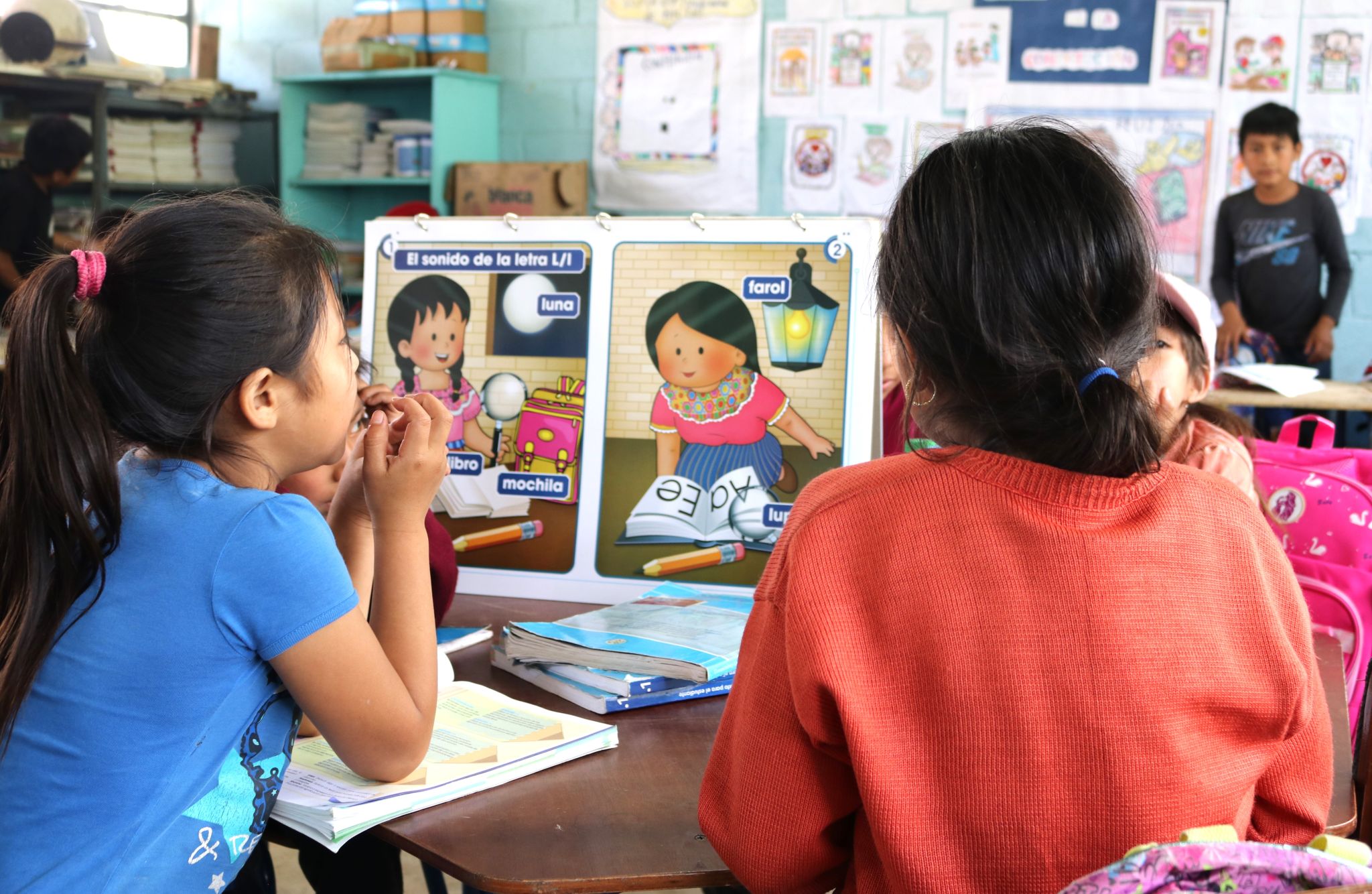
To change the dynamic, Marta introduced Megabooks — large-print reading materials written in local Mayan languages such as Mam, Q’anjob’al, Ixil, and K’iche’. The colorful stories reflect daily life and are paired with activities that help children connect sounds and letters, recall key details, and play with language in ways that feel natural and fun.
Rather than pushing students toward speed or perfection, Marta made space for curiosity. She encouraged them to linger over illustrations, talk through what they noticed, and recognize words that belonged to their communities. Slowly, reading became less intimidating and more of a shared experience they looked forward to each day.
“These materials motivated my students in a way I had never seen before,” Marta says. “Now, they ask for more books and want to continue exploring new stories.”
Marta teaches in a school that participates in UNIDOS, a school meals project implemented by Global Communities with local and national partners and funded by the U.S. government. Across 14 municipalities, UNIDOS works with 450 schools, pairing daily meals with bilingual literacy support to help children come to class nourished and ready to learn. The project trains teachers in new literacy approaches and brings parents into the process so they can reinforce lessons at home.
That connection matters. A 2024 study conducted through UNIDOS found that most students primarily use a Mayan language at home, and that learning in both their native language and Spanish supports progress toward biliteracy. When children understand what they are reading, engagement follows more naturally, along with confidence.
Over time, those shifts have shown up in measurable ways. In 2022, just over one-third of third-grade students demonstrated the ability to read and understand texts at their grade level. By 2024, that number had grown to nearly half. The evaluation was conducted independently and shared with the U.S. government to document how UNIDOS is contributing to meaningful learning gains.
Some of the most important changes, however, are harder to quantify. In UNIDOS-supported schools, students are encouraged to take a more active role in their own learning through everyday practices. Older students apply health and nutrition lessons in school gardens that serve as living classrooms, where they learn how food grows and tend crops that later complement what’s on their plate at lunch. Many bring those experiences home by starting family gardens that add variety to household diets and, in some cases, generate income.
Students also participate in School Governments, where representatives from each grade help lead hygiene and cleanliness efforts on campus. Using simple tools introduced through UNIDOS, they track progress and encourage accountability. Shared tasks are part of daily school life and help students see how their actions affect the wider community.
“Investing in these programs actively contributes to improving the health, prosperity, and quality of life within a community,” says Leonel Arguello, Director of Integrated School Feeding at Global Communities.
Across Guatemala, UNIDOS is creating learning environments where children feel recognized and supported — by honoring the languages they speak at home, improving school meals, and drawing parents and teachers into closer partnership. As a result, a more stable foundation is in place for students to grow, succeed, and plan for the future with greater confidence.